

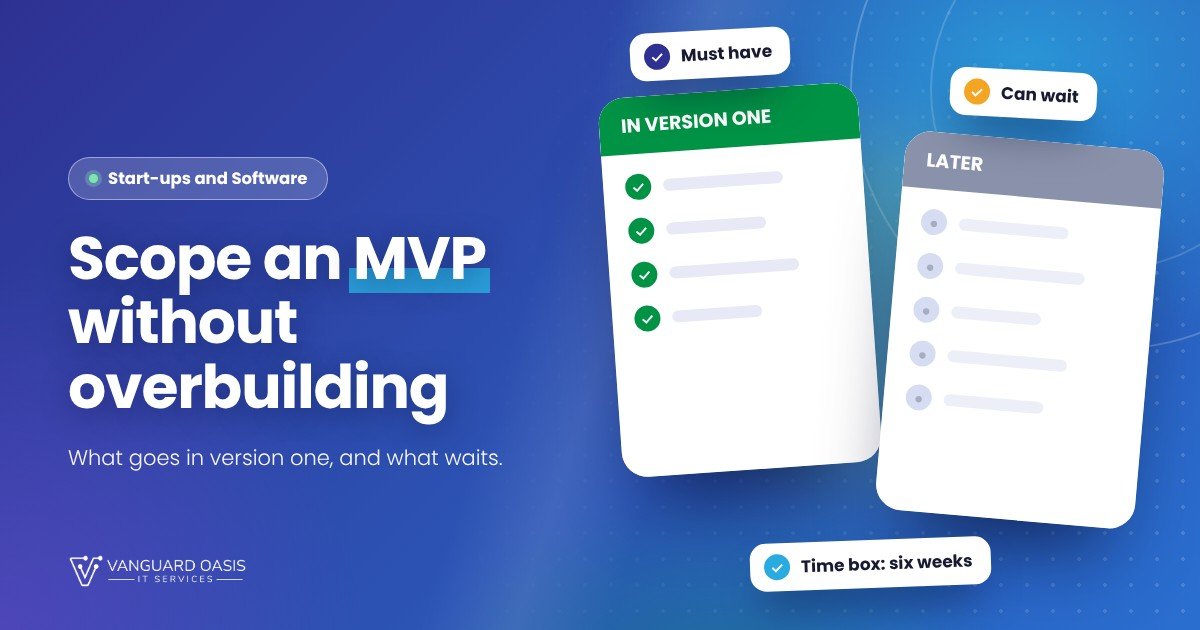
MVP stands for minimum viable product, which sounds more technical than it is. It means the smallest version of your idea that a real person can use to do a real job. Not a demo, and not a stripped-down version of the finished dream.
The hard part is not building it. It is deciding what to leave out, because every feature on your list feels essential until you have to pay for it. Here is the method we use with founders.
1. Name one person and one problem
Not "small businesses" or "anyone who travels". One kind of user with one job they struggle with today, such as a dispatcher who assigns pickups by WhatsApp. If you cannot describe them in a sentence, you are not ready to scope.
2. Write down the single journey
List the steps from the user's first action to the result they wanted. For a booking app: choose a service, pick a time, confirm, get a reminder. That journey is your product. Everything else either supports it or it can wait.
3. Sort every idea into three piles
Take your wish list and put each item into one of three groups: needed for the journey to work at all, nice to have, and later. Be strict about the first pile. If a feature can be done by a person behind the scenes for the first 20 customers, it belongs in "later".
Here is an illustrative example, for a small logistics firm that wants customers to book pickups online:
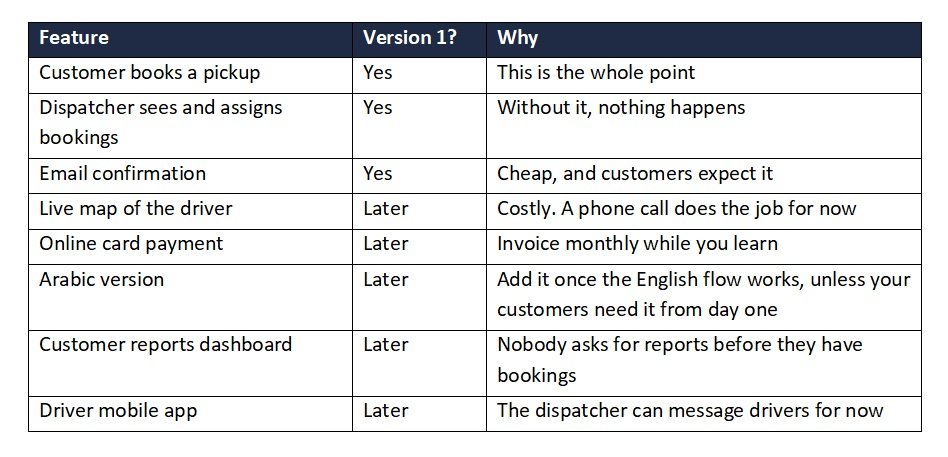
A useful test for any item still in the first pile: if we launched without it, would a real user be unable to finish the journey? If they could finish it, even awkwardly, it moves down.
4. Give it a time box and cut to fit
A first version usually takes us four to six weeks. Start from the date, not the feature list. If the list does not fit the time, something comes off the list. That sounds harsh, but the alternative is a project with no end date, and those are the ones that run out of money.
5. Decide what you will do by hand
Some of the best early products have people doing the work behind the scenes. Approving requests, sending invoices and checking details can all be manual at first. You learn what customers actually do before you pay to automate it.
6. Agree how you will know it worked
Pick two or three simple measures before you build. Perhaps ten real bookings in the first month, or half of your customers coming back. Without them, every opinion about the product sounds equally convincing.
Where scopes go wrong
- "Just one more feature." Each one is small. Together they double the project.
- Forgetting the admin side. Someone has to manage users, orders and content. It is real work, and it is often left off the list until late.
- Building for the investor, not the user. A feature that makes a pitch look good but no customer asks for can wait.
- Perfecting the design first. A clear, simple screen that works beats a beautiful one that arrives three months late.
Getting help with it
You can do all this yourself with a pen and an afternoon. If you would like a second pair of eyes, our scoping session is a two-hour working session that ends in a one-page written brief with a range estimate. It costs AED 500 to 750, and it is credited in full if you go ahead and build with us. Excluding 5% VAT.
Have a list that feels too long?
Have a list that feels too long? Book a free call and we will give you a rough estimate and an honest view on what fits your business. We reply within one working day.
0 Comments